





Second Capacity Building Workshop on Food Safety Assessment of Genetically Modified Plants
-

December 11, 2025-December 13, 2025
Taj Samudra
Colombo, Sri Lanka
-


The foods derived from modern biotechnology, including those that are produced locally or imported, are subject to a pre-market safety assessment as per national regulations. Harmonization of these regulatory requirements is important for advancing research and development, facilitating regional trade, and providing access to international markets. Discussions about the harmonization of safety assessment requirements for genetically engineered foods have progressed in multiple fora, most notably by the Codex Alimentarius Commission.
Discussions around regional harmonization of biosafety risk assessment and regulation in South Asia started in 2014, with interest and participation from stakeholders in Bangladesh, Bhutan, India, Pakistan, and Sri Lanka. Given the interest in advancing a consensus approach to harmonization of safety assessment of foods derived from genetically modified plants, the Agriculture and Food Systems Institute (AFSI) obtained support from the United States Department of Agriculture’s (USDA) Emerging Markets Program (EMP) to work with these stakeholders towards a formalized approach to regional harmonization in South Asia.
As part of the project on regional harmonization, an Expert Working Group (EWG) was established in September 2020 with representation from Bangladesh, Bhutan, India, and Sri Lanka. All experts were nominated by Competent National Authorities in their respective countries; however, they participated in the deliberations in their individual capacity. This project was implemented by AFSI, in collaboration with Biotech Consortium India Limited (BCIL), under the auspices of the South Asia Biosafety Program (SABP). The EWG, after several rounds of drafting, review, and discussion, developed a guidance document that describes a consensus approach to the safety assessment of foods derived from genetically engineered crops for application across the participating countries, based on the Codex Alimentarius Guideline for the Conduct of Food Safety Assessment of Foods Derived from Recombinant-DNA.
The four participating countries integrated the science-based framework outlined in the Codex Principles and Codex Guidelines into their national guidance documents for the regulation of foods derived from genetically modified plants. The EWG members recognized that this offered an opportunity to strengthen and harmonize the process for safety assessment of foods derived from genetically engineered plants by regulatory authorities in the region. It was agreed that a regional approach to assessing the safety of foods derived from genetically engineered plants, based on Codex Guidelines, may be adopted.
The report prepared by the EWG included a consensus statement, along with the following tools to support product developers who make genetically engineered plants worldwide and regulators assessing these products in South Asia:
- Information recommended for the safety assessment of foods derived from genetically engineered plants
- Format for application
- Recommended format for a risk assessment summary
The use of common formats would enable developers to prepare and submit a single dossier for consideration by the regulatory authorities, encourage parallel review of application dossiers by the regulatory agencies, and facilitate synchronous approvals.
The EWG suggested the use of tailored approaches for the adoption and operationalization of regional guidance in each of the participating countries. To further this effort, a series of technical capacity building workshops was organized in Bangladesh, Bhutan, and India. These programs helped establish a baseline understanding of the concepts and principles of safety assessment for food and feed derived from genetically engineered plants, with lectures and exercises on the whole food safety assessment paradigm, history of safe use, molecular characterization, toxicity testing, allergenicity testing, composition assessment, animal feeding studies, and risk communication.
Program in Sri Lanka
Continuing with the in-country capacity building initiatives conducted as part of this project, the first capacity building workshop for Sri Lanka was conducted on September 22-23, 2025. The two-day technical training program on GM food and feed safety assessment was implemented by AFSI, in collaboration with Sri Lanka’s Department of Agriculture, Ministry of Agriculture, Livestock, Land, and Irrigation and Ministry of Health, together with BCIL. The workshop was attended by more than 50 participants, who were introduced to key components of GM food and feed safety assessment and practical considerations, including data transportability and low level presence.
The second technical training program on safety assessment of food and feed derived from GM plants was conducted on December 11-13, 2025 for members of regulatory committees and technical experts. The training program provided in-depth technical information about the purpose, design, and conduct of studies used to inform safety assessments of foods and feeds derived from GM plants aligned with the consensus approach outlined by the EWG. Lectures, exercises, and breakout discussions also included a review of a dossier, taking into account the Sri Lanka Guidelines for GM Food and Feed Safety Assessment.

Agenda
Day 1
Thursday, December 11, 2025 | 09:30-17:00
| Time | Activity | Presenter/Facilitator | |
| 09:30 | Welcome and Introductions (participants and resource persons) | Dr. Ananda Jayalal Deputy Director General, Environmental Health, Occupational Health, and Food Safety Unit, Ministry of Health, Sri Lanka |
|
| 09:45 | Introduction to the Agriculture and Food Systems Institute (AFSI) and South Asia Biosafety Program (SABP) and Review of the Agenda | Dr. Bhavneet Bajaj Senior Manager–Scientific Programs, Agriculture and Food Systems Institute, USA |
|
| 10:00 | Safety of Foods and Feeds Derived from GM Plants: A Historical Perspective and Status | Dr. Vibha Ahuja Senior Advisor, South Asia Biosafety Program and Technical Advisor, Biotech Consortium India Limited, India |
|
| 10:15 | Key Concepts for the Safety Assessment of GM Plants | Dr. Flerida A. Cariño Consultant, Philippines Food and Drug Administration and Professor of Biochemistry (retired), University of the Philippines–Diliman, Philippines |
|
| 10:35 | Regulations and Guidelines for GM Food Safety Assessment in Sri Lanka | Dr. Ananda Jayalal | |
| 11:05 | Vote of Thanks | TBD | |
| 11:10 | Tea Break | ||
| 11:30 | Host and Donor Organisms | Dr. Flerida A. Cariño | |
| 12:00 | OECD Consensus Documents on Biology and Compositional Considerations and Other Resources | Dr. Bhavneet Bajaj | |
| Exercise 1: Breakout Groups | |||
| 13:00 | Lunch | ||
| 14:00 | Exercise 1 (continued) | Dr. Bhavneet Bajaj | |
| 14:30 | Molecular Characterization of GM Plants and Expressed Materials | Dr. Bhavneet Bajaj | |
| Exercise 2: Breakout Groups | |||
| 16:00 | Tea Break | ||
| 16:30 | Exercise 2 (continued) | Dr. Bhavneet Bajaj | |
| 17:00 | End of Day 1 |
Day 2
Friday, December 12, 2025 | 09:30-17:30
| Time | Activity | Presenter/Facilitator | |
| 09:30 | Recap and Questions from Day 1 | ||
| 09:45 | Assessment of Possible Toxicity of Novel Proteins
|
Dr. Flerida A. Cariño | |
| 10:30 | Exercise 3: Breakout Groups | Dr. Flerida A. Cariño | |
| 11:30 | Tea Break | ||
| 12:00 | Assessment of Possible Allergenicity of Novel Proteins | Dr. Vibha Ahuja | |
| 12:30 | Exercise 4: Breakout Groups | Dr. Vibha Ahuja | |
| 13:30 | Lunch | ||
| 14:30 | Compositional Analysis of Key Components | Dr. Bhavneet Bajaj | |
| AFSI Crop Compositional Database | |||
| 15:00 | Exercise 5: Menti Guided Exercise | Dr. Bhavneet Bajaj | |
| 16:00 | Tea Break | ||
| 16:15 | Understanding Animal Feeding Studies in the Context of GM Food/Feed Safety Assessments | Dr. Vibha Ahuja | |
| 16:35 | Internet Resources for Food Safety Assessment | Dr. Bhavneet Bajaj | |
| 16:55 | Exercise 6: Menti Guided Exercise | Dr. Bhavneet Bajaj | |
| 17:30 | End of Day 2 |
Day 3
Saturday, December 13, 2025 | 09:30-14:00
| Time | Activity | Presenter/Facilitator | |
| 09:30 | Recap and Questions from Day 2 | ||
| 09:35 | Preparation of a Safety Assessment Summary | Dr. Flerida A. Cariño | |
| Exercise 7: Breakout Groups | |||
| 11:00 | Tea Break | ||
| 11:20 | Handling GM Plants and Derived Products: Practical Considerations • Data Transportability • Low Level Presence • Processed Products |
Dr. Vibha Ahuja | |
| 11:50 | Exercise 8: Menti Guided Discussion | Dr. Bhavneet Bajaj | |
| 12:30 | Open Forum and Post-Event Survey | Dr. Bhavneet Bajaj | |
| 13:00 | Close of Workshop and Lunch |
Speakers
Ananda Jayalal, Ph.D.
Deputy Director General, Environmental Health, Occupational Health, and Food Safety Unit, Ministry of Health, Sri Lanka
 Dr. Ananda Jayalal is a public health specialist serving as the Deputy Director General in the Ministry of Health and Mass Media of Sri Lanka. He is in charge of the Environmental Health, Occupational Health, and Food Safety units. He serves as the contact point for the International Food Standards Commission (CODEX) and Notification Authority for the Sanitary and Phytosanitary Agreement of the World Trade Organization. In addition, he serves on the Technical Barriers to Trade and Trade Facilitation committees. He has extensive experience in food policies and laws and participated in the development of international and national food standards. He has a special interest in environmental toxicology, food contaminants, and their impact on health. In this regard, he has researched the effect of food contaminants on chronic kidney disease. He is experienced in risk assessment of genetically modified food and the risk management options available.
Vibha Ahuja, Ph.D.
Senior Advisor, South Asia Biosafety Program and Technical Advisor, Biotech Consortium India Limited (BCIL), India
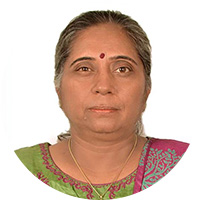 Dr. Vibha Ahuja is a Technical Advisor at Biotech Consortium India Limited (BCIL), where she began her career in 1993 and served as Chief General Manager until her retirement at the end of 2025. She is an expert in biosafety and regulatory affairs, particularly in relation to genetically modified organisms, with over 30 years of experience in the field. Dr. Ahuja is deeply familiar with the Indian biosafety regulatory framework and has contributed to the formulation and dissemination of national guidelines, as well as serving as a member of expert committees. Her work includes providing regulatory compliance support to facilitate the commercialization of biotechnology innovations. She is also actively engaged as a regional resource expert on gene-edited plants. Throughout her career, Dr. Ahuja has led numerous biosafety capacity-building initiatives in India and South Asia, delivering training through seminars, workshops, and national and international programs. She has also authored a range of publications addressing biosafety, biodiversity, and related stakeholder concerns.
Bhavneet Bajaj, Ph.D., PMP
Senior Manager, Agriculture & Food Systems Institute (AFSI), USA
 Dr. Bhavneet Bajaj joined the Agriculture & Food Systems Institute (AFSI) in July 2018 as Scientific Program Manager. She has been involved in projects related to safety assessment of foods and feeds derived from genetically engineered plants and serves as a resource person in providing technical support for capacity building programs in biotechnology. She was also the program lead for USDA-funded technical training for Chinese and Indonesian regulators and manages operations for both the Crop Composition Database and the World Nutrient Databases for Dietary Studies.
Prior to joining AFSI, Dr. Bajaj was a Visiting Scientist at the Sustainable Agricultural Systems Laboratory, Agricultural Research Service, USDA, where she worked on carotenoid pathway regulation in tomatoes. Before then, she was Associate Investigator with the Plant Protection group at (then) DuPont, where she devised a metabolic engineering strategy for insect control in soybean. While in India, she was an Assistant Professor at Jaipur National University, where she taught genetic engineering, enzymology, and biochemistry courses to M.Sc. level students. Her research work over the past 12 years involved plant secondary metabolites of nutritional, agricultural, and medicinal importance.
Flerida A. Cariño, Ph.D.
Consultant, Philippines Food and Drug Administration and Former Professor of Biochemistry, University of the Philippines – Diliman, Philippines
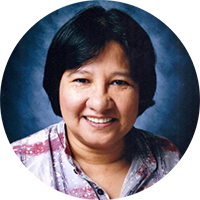 Dr. Flerida Cariño retired in April 2019 as a full professor of biochemistry from the University of the Philippines, Diliman. At the university, she was the former director of two institutes–the Institute of Chemistry and the Institute of Environmental Science and Meteorology. She holds a Ph.D. in Insecticide Toxicology from Texas A&M University and has worked extensively with insecticide resistance genetics, biochemistry, and molecular biology.
Dr. Cariño served as a physical scientist member of the Department of Science and Technology (DOST) Biosafety Committee from 2010-2022. She has been involved in drafting policy and regulations for genetically modified organisms (GMOs) since 1994. She has served as faculty in several local and international training programmes on food safety and environmental risk assessment for several international organizations involved in biosafety capacity building and for various Philippine government institutions involved in the regulation of GMOs. She was a member of the Scientific Advisory Board of the Organization for the Prohibition of Chemical Weapons (OPCW) from 2011-2017 and has actively represented the Philippine position in the Convention on Biological Diversity and meetings of parties to the Cartagena Protocol on Biosafety of Living Modified Organisms. She is presently part of the Department of Health’s COVID Laboratory Expert Panel and is a consultant to the Philippines’ Food and Drug Administration, providing guidance on urban pesticides and risk assessments of GMOs and their products.
Discover Related Events
-
 Capacity Building Workshop on Food Safety Assessment of Genetically Modified Plants
September 22, 2025-September 23, 2025
Colombo, Sri Lanka
-
-
Third Capacity Building Workshop on Food Safety Assessment of Genetically Engineered Plants
August 20, 2025-August 22, 2025
New Delhi, India
-
-
Workshop II: Food Safety Concepts and the Bangladesh Guidelines for Safety Assessment of Food Derived from Genetically Engineered Plants
September 8, 2023-September 10, 2023
Gazipur, Bangladesh
-
-
Workshop on Foods Derived from Modern Biotechnology: Context and Safety Assessment
October 9, 2023-October 11, 2023
Thimphu, Bhutan
-