





Capacity Building Workshop on Food Safety Assessment of Genetically Modified Plants
-

September 22, 2025-September 23, 2025
9:30 am - 5:00 pmTaj Samudra
Colombo, Sri Lanka
-


The foods derived from modern biotechnology, including those that are produced locally or imported, are subject to a pre-market safety assessment as per national regulations. Harmonization of these regulatory requirements is important for advancing research and development, facilitating regional trade, and providing access to international markets. Discussions about the harmonization of safety assessment requirements for genetically engineered foods have progressed in multiple fora, most notably by the Codex Alimentarius Commission.
Discussions around regional harmonization of biosafety risk assessment and regulation in South Asia started in 2014, with interest and participation from stakeholders in Bangladesh, Bhutan, India, Pakistan, and Sri Lanka. Given the interest in advancing a consensus approach to harmonization of safety assessment of foods derived from genetically engineered (GE) plants, the Agriculture and Food Systems Institute (AFSI) obtained support from the United States Department of Agriculture’s (USDA) Emerging Markets Program (EMP) to work with these stakeholders towards a formalized approach to regional harmonization in South Asia.
As part of the project on regional harmonization, an Expert Working Group (EWG) was established in September 2020 with representation from Bangladesh, Bhutan, India, and Sri Lanka. All experts were nominated by Competent National Authorities in their respective countries; however, they participated in the deliberations in their individual capacity. This project was implemented by AFSI, in collaboration with Biotech Consortium India Limited (BCIL), under the auspices of the South Asia Biosafety Program (SABP). The EWG, after several rounds of drafting, review, and discussion, developed a report that describes a consensus approach to the safety assessment of foods derived from genetically engineered crops for application across the participating countries, based on the Codex Alimentarius Guideline for the Conduct of Food Safety Assessment of Foods Derived from Recombinant-DNA.
The four participating countries integrated the science-based framework outlined in the Codex Principles and Codex Guidelines into their national guidance documents for the regulation of foods derived from genetically engineered plants. The EWG members recognized that this offers an opportunity to strengthen and harmonize the process for safety assessment of foods derived from genetically engineered plants by regulatory authorities in the region. It was agreed that a regional approach to assessing the safety of foods derived from genetically engineered plants, based on Codex Guidelines, may be adopted.
The report prepared by the EWG included a consensus statement, along with the following tools to support product developers who make genetically engineered plants worldwide and regulators assessing these products in South Asia:
- Information recommended for the safety assessment of foods derived from genetically engineered plants
- Format for application
- Recommended format for a risk assessment summary
The use of common formats would enable developers to prepare and submit a single dossier for consideration by the regulatory authorities, encourage parallel review of application dossiers by the regulatory agencies, and facilitate synchronous approvals.
The EWG suggested the use of tailored approaches for the adoption and operationalization of regional guidance in each of the participating countries. To further this effort, a series of technical capacity building workshops was organized in Bangladesh, Bhutan, and India. These programs helped establish a baseline understanding of the concepts and principles of safety assessment for food and feed derived from genetically engineered plants, with lectures and exercises on the whole food safety assessment paradigm, history of safe use, molecular characterization, toxicity testing, allergenicity testing, composition assessment, animal feeding studies, and risk communication.
Sessions on the global regulatory landscape for foods and feeds derived from genetically engineered plants, as well as practical aspects about the handling of genetically engineered plants and their derived products, such as low level presence, safety assessment of low risk highly purified products, and data transportability, were included.
Program
Continuing with the in-country capacity building initiatives conducted as part of this project, this two-day technical training program on genetically engineered food and feed safety assessment was implemented by the Agriculture and Food Systems Institute, in collaboration with Sri Lanka’s Department of Agriculture, Ministry of Agriculture, Livestock, Land, and Irrigation and Ministry of Health, and together with Biotech Consortium India Limited, on 22-23 September 2025 in Colombo, Sri Lanka. The objective of this training program was to provide risk assessors and other stakeholders with in-depth technical information about the purpose, design, and conduct of studies used to inform safety assessments of foods and feeds derived from genetically engineered plants aligned with the consensus approach outlined by the EWG. Presentations, discussions, and case studies helped participants delve into the framework for safety assessment for genetically engineered plants.

Agenda
Day 1
September 22, 2025 | 9:30 am - 5:00 pm
| Time | Activity | Presenter/Facilitator | |
| 9:30 am | Welcome Address | Dr. W.A.R.T. Wickramaarachchi Director General of Agriculture, Sri Lanka |
|
| 9:35 am | Introductory Remarks | Dr. Bhavneet Bajaj Senior Manager – Scientific Programs, Agriculture & Food Systems Institute (AFSI), USA |
|
| 9:45 am | Keynote Address Foods and Feeds Derived from Modern Biotechnology: An Overview of Safe Use for 30 Years |
Dr. Vibha Ahuja Chief General Manager, Biotech Consortium India Limited and Senior Advisor, South Asia Biosafety Program, India |
|
| 10:00 am | Navigating GM Food Safety in Sri Lanka: The Role of Codex | Dr. Ananda Jayalal Deputy Director General, Environmental Health, Occupational Health, and Food Safety Unit, Ministry of Health, Sri Lanka |
|
| 10:20 am | Address by the Chief Guest | Mr. D.P. Wickramasinghe Secretary, Ministry of Agriculture, Livestock, Land, and Irrigation, Sri Lanka |
|
| 10:30 am | Vote of Thanks | Dr. W.M.U.K. Rathnayake Additional Secretary, Ministry of Agriculture, Livestock, Land, and Irrigation, Sri Lanka |
|
| 10:35 am | Tea Break | ||
| Technical Session I: Perspectives on the Safety Assessment of Genetically Engineered Foods and Feeds in South Asia | |||
| 11:00 am | Country Perspectives | ||
| Bangladesh | Dr. Mohammad Mostafa Chief Scientific Officer, Bangladesh Council of Scientific and Industrial Research and Member, Public Health and Nutrition, Bangladesh Food Safety Authority, Bangladesh |
||
| Bhutan | Ms. Barsha Gurung Principal Biosecurity Officer, Bhutan Food and Drug Administration, Bhutan |
||
| India | Dr. Dinesh Kumar Professor, Faculty of Life Science and Biotechnology, South Asian University, India |
||
| Sri Lanka | Mrs. M.H.A.D. Subhashini Assistant Director of Agriculture (Research), National Plant Quarantine Service, Sri Lanka |
||
| 12:30 pm | Technical-Level Harmonization: An Overview of the Tools Developed by the Expert Working Group | Dr. Lalitha Gowda Chief Scientist (retired), Central Food Technology Research Institute, India |
|
| 1:00 pm | Lunch | ||
| Technical Session II: The Science of Safety Assessments of Genetically Engineered Foods and Feeds | |||
| 2:00 pm | Key Concepts for Food Safety Assessment | Dr. Flerida A. Cariño Consultant, Philippines Food and Drug Administration and Professor of Biochemistry (retired), University of the Philippines–Diliman, Philippines |
|
| 2:30 pm | Information Resources for Safety Assessment | Dr. Bhavneet Bajaj | |
| 3:00 pm | Menti-Guided Exercise 1 | ||
| 3:45 pm | Tea Break | ||
| 4:00 pm | Considerations for Safety Assessment of Foods and Feeds Derived from Genetically Engineered Plants | ||
| • Toxicity | Dr. Flerida A. Cariño | ||
| • Allergenicity | Dr. Vibha Ahuja | ||
| • Composition Assessment | Dr. Bhavneet Bajaj | ||
| 4:45 pm | Open Forum | ||
| 5:00 pm | Close of Day 1 | ||
Day 2
September 23, 2025 | 9:30 am - 1:30 pm
| Time | Activity | Presenter/Facilitator | |
| 9:30 am | Recap of Day 1 and Review of the Agenda for Day 2 | Dr. Bhavneet Bajaj | |
| 10:00 am | Assessment of Possible Toxicity of Novel Proteins: Proteins as Toxins, the Weight of Evidence Approach, and In vivo Toxicity Studies | Dr. Flerida Cariño | |
| Technical Session III: Handling Genetically Engineered Plants and Derived Products | |||
| 9:35 am | Low Level Presence: Overview, Guidelines, and Regulations | Dr. Flerida A. Cariño | |
| 9:55 am | Detection of Genetically Engineered Foods: Feasibility and Limits | Dr. Lalitha Gowda | |
| 10:15 am | Processed Products Derived from Genetically Engineered Plants Used as Food or Feed | Dr. Vibha Ahuja | |
| 10:35 am | Transportability of Data for Risk Assessments of Genetically Engineered Plants | Dr. Bhavneet Bajaj | |
| 10:55 am | Open Forum and Q&A | ||
| 11:15 am | Tea Break | ||
| 11:45 am | Introduction to the Case Studies • Scenario 1: Low Level Presence • Scenario 2: Data Transportability • Scenario 3: Leveraging the Experience of Other Countries |
Dr. Bhavneet Bajaj | |
| 11:50 am | Breakout Groups Discussion on the Case Studies |
Attendees | |
| 12:45 pm | Menti-Guided Exercise 2 | ||
| 1:15 pm | Post-Event Survey | ||
| 1:25 pm | Concluding Remarks | Dr. D.G.C. Jeewani Additional Director, Plant Genetic Resources Centre, Sri Lanka |
|
| 1:30 pm | Lunch | ||
| Close of Program | |||
Speakers
Vibha Ahuja, Ph.D.
Chief General Manager, Biotech Consortium India Limited (BCIL) and Senior Advisor, South Asia Biosafety Program, India
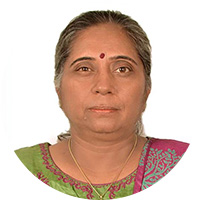 Dr. Vibha Ahuja is the Chief General Manager of Biotech Consortium India Limited (BCIL), where she began her career in 1993. She is an expert in biosafety and regulatory affairs, particularly in relation to genetically modified organisms, with over 30 years of experience in the field. Dr. Ahuja is deeply familiar with the Indian biosafety regulatory framework and has contributed to the formulation and dissemination of national guidelines, as well as serving as a member of expert committees. Her work includes providing regulatory compliance support to facilitate the commercialization of biotechnology innovations. She is also actively engaged as a regional resource expert on gene-edited plants. Throughout her career, Dr. Ahuja has led numerous biosafety capacity-building initiatives in India and South Asia, delivering training through seminars, workshops, and national and international programs. She has also authored a range of publications addressing biosafety, biodiversity, and related stakeholder concerns.
Bhavneet Bajaj, Ph.D., PMP
Senior Manager, Agriculture & Food Systems Institute (AFSI), USA
 Dr. Bhavneet Bajaj joined the Agriculture & Food Systems Institute (AFSI) in July 2018 as Scientific Program Manager. She has been involved in projects related to safety assessment of foods and feeds derived from genetically engineered plants and serves as a resource person in providing technical support for capacity building programs in biotechnology. She was also the program lead for USDA-funded technical training for Chinese and Indonesian regulators and manages operations for both the Crop Composition Database and the World Nutrient Databases for Dietary Studies.
Prior to joining AFSI, Dr. Bajaj was a Visiting Scientist at the Sustainable Agricultural Systems Laboratory, Agricultural Research Service, USDA, where she worked on carotenoid pathway regulation in tomatoes. Before then, she was Associate Investigator with the Plant Protection group at (then) DuPont, where she devised a metabolic engineering strategy for insect control in soybean. While in India, she was an Assistant Professor at Jaipur National University, where she taught genetic engineering, enzymology, and biochemistry courses to M.Sc. level students. Her research work over the past 12 years involved plant secondary metabolites of nutritional, agricultural, and medicinal importance.
Flerida A. Cariño, Ph.D.
Consultant, Philippines Food and Drug Administration and Former Professor of Biochemistry, University of the Philippines – Diliman, Philippines
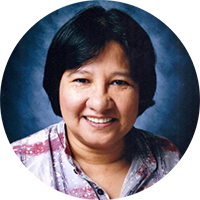 Dr. Flerida Cariño retired in April 2019 as a full professor of biochemistry from the University of the Philippines, Diliman. At the university, she was the former director of two institutes–the Institute of Chemistry and the Institute of Environmental Science and Meteorology. She holds a Ph.D. in Insecticide Toxicology from Texas A&M University and has worked extensively with insecticide resistance genetics, biochemistry, and molecular biology.
Dr. Cariño served as a physical scientist member of the Department of Science and Technology (DOST) Biosafety Committee from 2010-2022. She has been involved in drafting policy and regulations for genetically modified organisms (GMOs) since 1994. She has served as faculty in several local and international training programmes on food safety and environmental risk assessment for several international organizations involved in biosafety capacity building and for various Philippine government institutions involved in the regulation of GMOs. She was a member of the Scientific Advisory Board of the Organization for the Prohibition of Chemical Weapons (OPCW) from 2011-2017 and has actively represented the Philippine position in the Convention on Biological Diversity and meetings of parties to the Cartagena Protocol on Biosafety of Living Modified Organisms. She is presently part of the Department of Health’s COVID Laboratory Expert Panel and is a consultant to the Philippines’ Food and Drug Administration, providing guidance on urban pesticides and risk assessments of GMOs and their products.
Lalitha R. Gowda, Ph.D.
Chief Scientist (Retired), Council of Scientific and Industrial Research Central Food Technological Research Institute (CSIR-CFTRI), India
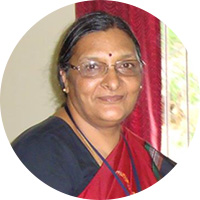 Dr. Lalitha R. Gowda is the former Chief Scientist of the Council of Scientific and Industrial Research Central Food Technological Research Institute (CSIR-CFTRI), Mysore, where she served until her retirement in 2014. She earned her Ph.D. in biochemistry from Baylor University in Texas, USA, and completed post-doctoral training at the Department of Biochemistry, University of Cambridge, UK. With over three and a half decades of professional experience, Dr. Gowda specialized in structural biology of plant proteins, protein engineering, analytical biochemistry, and food safety. She has published more than 90 peer-reviewed research articles in reputable journals and has held numerous advisory and leadership roles in food safety and biotechnology regulation. These include serving as a member of the Genetic Engineering Appraisal Committee of the Ministry of Environment, Forest and Climate Change (MoEF&CC), Government of India; a former member of the Food Safety and Standards Authority of India (FSSAI); Chair of the Scientific Panel on GM Foods; and an independent member of the Scientific Committee of FSSAI. She currently chairs FSSAI’s RAFT (Risk Assessment, Food Testing and Analytical Tools) Committee. Known for her deep technical expertise and globally recognized contributions to food analysis and safety, Dr. Gowda continues to remain active in training and knowledge dissemination post-retirement. She has received multiple accolades for her contributions to both teaching and research.
Barsha Gurung
Principal Biosecurity Officer, Bhutan Food and Drug Administration, Bhutan
 Barsha Gurung is a civil servant with 16 years of professional experience in regulatory and quarantine services. She holds a bachelor’s degree in horticulture from Dr. YS Parmar University in Himachal Pradesh, India, which has provided her with a strong foundation in agricultural sciences and plant health. Currently, she serves as the Principal Biosecurity Officer at the Bhutan Food and Drug Authority (BFDA) under the Ministry of Health and is stationed at Paro International Airport, the only aerial entry point into Bhutan. In this capacity, she also serves as the regional chief, overseeing all activities related to BFDA’s mandates in the region.
Her role involves comprehensive responsibilities in various regulatory aspects, including biosecurity, food safety, drug control, narcotic substance regulation, and both plant and animal quarantine. She coordinates and implements policies to prevent the introduction and spread of pests, diseases, and contaminants that could threaten Bhutan’s unique biodiversity, agriculture, public health, and environment.
Additionally, her work encompasses biosafety measures to manage biological risks associated with import and export activities at the airport. This includes ensuring compliance with international biosafety standards and guidelines to protect human health and the environment from harmful biological agents and genetically modified organisms (GMOs).
By integrating biosecurity and biosafety frameworks, she contributes to the safeguarding of national health security and sustainability. The role requires coordinated liaising with multiple national and international agencies, including customs, agriculture departments, and health authorities, as well as enforcement of regulations to maintain Bhutan’s stringent import controls.
Ananda Jayalal, Ph.D.
Deputy Director General, Environmental Health, Occupational Health, and Food Safety Unit, Ministry of Health, Sri Lanka
 Dr. Ananda Jayalal is a public health specialist serving as the Deputy Director General in the Ministry of Health and Mass Media of Sri Lanka. He is in charge of the Environmental Health, Occupational Health, and Food Safety units. He serves as the contact point for the International Food Standards Commission (CODEX) and Notification Authority for the Sanitary and Phytosanitary Agreement of the World Trade Organization. In addition, he serves on the Technical Barriers to Trade and Trade Facilitation committees. He has extensive experience in food policies and laws and participated in the development of international and national food standards. He has a special interest in environmental toxicology, food contaminants, and their impact on health. In this regard, he has researched the effect of food contaminants on chronic kidney disease. He is experienced in risk assessment of genetically modified food and the risk management options available.
D.G.C. Jeewani, Ph.D.
Additional Director, Plant Genetic Resources Centre, Sri Lanka
 Dr. D.G.C. Jeewani is the Additional Director of the Plant Genetic Resources Centre (PGRC) in Gannoruwa. She began her career as a Plant Breeder and Assistant Director of Agriculture Research at the Grain Legumes and Oil Crops Research and Development Centre (2007–2021), contributing to the release of six crop varieties, including four groundnuts (with two jumbo peanuts), a black-seeded sesame, and a mustard variety. She obtained her Ph.D. in Crop Genetics and Breeding at Northwest Agriculture and Forest University in China.
She has authored over 30 publications in SCI-indexed international and national journals, earning awards such as Best Research Paper (ASDA 2020) and Best Presenter (2023, 2024). Dr. Jeewani has led and collaborated on national and international projects in crop improvement, molecular biology, biotechnology, and genetic resource conservation, while also mentoring nearly 30 undergraduates.
As Sri Lanka’s national focal point for the International Treaty on Plant Genetic Resources for Food and Agriculture (ITPGRFA), she plays an active role in global efforts on genetic resource management. With her strong scientific background, leadership, and dedication, Dr. Jeewani continues to make impactful contributions to agricultural research, food security, and biodiversity conservation in Sri Lanka.
Dinesh Kumar, Ph.D.
Professor, Faculty of Life Science and Biotechnology, South Asian University, India
 Prof. Dr. Dinesh Kumar is a member of the Faculty of Life Science and Biotechnology at South Asian University. Until August 2025, he served as the Principal Scientist in the Bioinformatics Division at the Indian Council of Agricultural Research (ICAR) Indian Agricultural Statistics Research Institute (IASRI) in New Delhi, a position he had held since 2012. He previously served as Professor, Dean of Academic Affairs, and Director of the Office of International Affairs at the Central University of Haryana (2021–2023), and as Senior Scientist at the ICAR–National Bureau of Animal Genetic Resources (NBAGR), Karnal (1997–2012). He holds undergraduate, postgraduate, and doctoral degrees in biotechnology from Banaras Hindu University (BHU), Varanasi, and earned his Ph.D. in 1997. Dr. Kumar also holds law degrees (LL.B. and LL.M.) from Kurukshetra University, a postgraduate diploma in technology management from the University of Hyderabad (where he was awarded a Gold Medal), and a diploma in intellectual property rights from IGNOU, New Delhi. He completed post-doctoral fellowships at Iowa State University, USA, in 2003–2004 and 2007–2008.
Until August 2025, Dr. Kumar chaired the GMO and Foods Scientific Panel of the Food Safety and Standards Authority of India (FSSAI), Ministry of Health and Family Welfare, Government of India. He has served as a member of the DST/SERB Task Force in plant sciences (2020–2023). With over 100 research publications in high-impact journals and more than 50 patents and copyrights, his notable scientific contributions include the world’s first cow genome sequencing (Science, 2009), discovery of the dwarfism gene in U.S. beef cattle (PNAS, 2009), and development of the world’s first DNA signature server for plant varieties (Scientific Reports, 2019). He is also known for his work on wheat microbiomes and bioethanol production. In addition to his research, Dr. Kumar is a motivational speaker, provides free career counseling to students, offers legal support to academic victims, and is actively involved with orphanage initiatives.
Mohammad Mostafa, Ph.D.
Chief Scientific Officer, Bangladesh Council of Scientific and Industrial Research and Member, Public Health and Nutrition, Bangladesh Food Safety Authority, Bangladesh
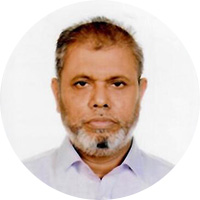 Dr. Mohammad Mostafa has served as a Member (Public Health and Nutrition) in the Bangladesh Food Safety Authority (BFSA) since 1 January 2024. Prior to joining the BFSA, he worked as a Director (Addl. Charge) at the Bangladesh Council of Scientific and Industrial Research (BCSIR) Chattogram Laboratories from 7 July 2018 to 31 December 2023 and as Research Coordinator for BCSIR from September 2017 to July 2018. Dr. Mostafa completed his B.Sc. (Hons) and M.Sc. at the Department of Chemistry, University of Dhaka and joined BCSIR as a Scientific Officer in 1994. Dr. Mostafa was awarded a Ph.D. from the University of Dhaka through BCSIR’s Human Resource Development (HRD) project and completed a post-doctoral research fellowship from the University of Fort Hare, South Africa in 2009. He has published 42 research papers in reputed national and international peer reviewed journals. From 2012 to 2016, he was a Quality Manager at BCSIR Dhaka Laboratories for lab accreditation purposes. Dr. Mostafa successfully completed the ISO 9001, ISO 14001, and OHSAS 18001 Integrated Management Systems Internal Auditor Training Course organized by SGS and held in Melbourne, Australia. He also successfully completed Associate Programme-2014 held in Netherlands, the United Kingdom, and Poland in 2014 and Natural Product Training and Development Programme held in UTM, Malaysia in 2015, both organized by the Organization for the Prohibition of Chemical Weapons (OPCW). Dr. Mostafa has also participated in different instrument training programs and presents research works at different scientific seminars at home and abroad.
W.M.U.K. Rathnayake, Ph.D.
Additional Secretary (Agriculture Technology), Ministry of Agriculture, Livestock, Land, and Irrigation, Sri Lanka
 Dr. W.M.U.K. Rathnayake currently serves as the Additional Secretary (Agriculture Technology) to the Ministry of Agriculture, Livestock, Land and Irrigation. She has served in the Sri Lanka Agricultural Service (SLAgS) since 1996, holding a series of leadership and research-focused positions that span nearly three decades. Her career reflects a deep commitment to agricultural research, natural resources management, and institutional leadership within Sri Lanka’s agriculture sector.
She obtained her B.Sc. in Agriculture from the University of Peradeniya in 1993, followed by an M.Sc. in Natural Resources Conservation from the Asian Institute of Technology, Thailand in 1999. In 2019, she completed her Ph.D. in Geo-informatics at the University of Peradeniya, further strengthening her expertise in applying advanced technologies to sustainable agriculture and resource management.
Her professional journey includes serving at the Field Crops Research and Development Institute (FCRDI), Mahailluppallama, and the Rice Research and Development Institute (RRDI), Bathalagoda. She later held the position of Director, Natural Resources Management at the Department of Agriculture, Peradeniya, and subsequently was appointed Director General (Agriculture) in the Irrigation Sector of the Ministry of Agriculture. She also undertook responsibilities as Additional Director General (Research) at the Department of Agriculture before assuming her current role in 2025.
Throughout her career, Dr. W.M.U.K. Rathnayake has contributed significantly to agricultural research, technology adoption, and sustainable resource management. Her academic and professional achievements underscore her leadership and dedication to strengthening Sri Lanka’s agriculture sector through research, innovation, and policy development.
M.H.A.D. Subhashini
Assistant Director of Agriculture (Research), National Plant Quarantine Service, Sri Lanka
 Mrs. M.H.A.D. Subhashini is employed as a Plant Pathologist at the National Plant Quarantine Service of Sri Lanka. She graduated from the Faculty of Agriculture, University of Peradeniya, with a B.Sc.Agriculture (special) degree. In 2000, she began working for the Department of Agriculture. Her doctorate in plant pathology is now complete. She is in charge of the technical operations, research, overall supervision, and development activities of the Plant Pathology division, which includes the Molecular Biology, Mycology, Virology, Bacteriology, and Living Modified Organisms (LMO) detection laboratories. She has been greatly involved in developing all laboratories with high-end equipment procured from several projects to strengthen the phytosanitary measures. She actively contributed to the establishment of the Living Modified Organisms (LMO)/Genetically Modified Organisms (GMO) detection laboratory under the project “Implementation of the National Biosafety Framework in Accordance with the Cartagena Protocol on Biosafety.” Over the years, Mrs. M.H.A.D. Subhashini has contributed significantly to preventing the entry of harmful organisms into the country by detecting plant pathogens in quarantine significance in import consignments, which poses a threat to the biodiversity of the country, and has contributed over 30 publications as main author and co-author for research conducted by herself. She immensely contributed to confirming the country’s freedom from the devastating pathogen Xylella fastidiosa by conducting a statistically sound risk-based island-wide survey in order to lift the international trade restriction. In the past several years, many regulated pests, including quarantine pathogens, have been detected in import consignments and prevented from entering the country, which poses a threat to the biodiversity of the country.
W.A.R.T. Wickramaarachchi, Ph.D.
Director General of Agriculture, Sri Lanka
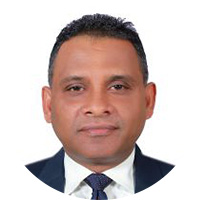 Dr. W.A.R.T. Wickramaarachchi, Director General of Agriculture in Sri Lanka, is a distinguished agricultural scientist and administrator with over three decades of service in research, policy, and international collaboration. An expert in plant pathology, plant protection, phytosanitary systems, and agricultural policy, he has been instrumental in advancing the country’s agricultural sector.
He has held several senior leadership roles, including Additional Secretary (Agriculture Technology) at the Ministry of Agriculture, Director General (Agriculture) at the Ministry of Plantation, and Director of the Horticultural Crops Research and Development Institute (HORDI). Earlier, as Head of the National Plant Quarantine Service and Sri Lanka’s Official Focal Point to the International Plant Protection Convention (IPPC), he played a vital role in safeguarding plant health and facilitating international trade. His international experience includes serving as Senior Program Specialist at the SAARC Agriculture Centre in Dhaka, Bangladesh.
Dr. Wickramaarachchi holds a B.Sc. in Agriculture from the University of Peradeniya, an M.Sc. in Plant Pathology from Acharya N.G. Ranga Agricultural University, India, and a Ph.D. in Plant Pathology from the University of Agricultural Sciences, Bangalore, India. He has made notable scientific contributions in molecular diagnostics, integrated disease management, and development of disease-resistant crop varieties.
He has also coordinated major foreign-funded projects supported by the Japan International Cooperation Agency (JICA), Korea International Cooperation Agency (KOICA), Food and Agriculture Organization of the United Nations (FAO), and other international partners, modernizing Sri Lanka’s plant quarantine system and strengthening its phytosanitary capacity. Through his leadership, research, and vision, Dr. Wickramaarachchi continues to guide Sri Lanka’s agriculture toward resilience, innovation, and food security.
D.P. Wickramasinghe
Secretary, Ministry of Agriculture, Livestock, Land, and Irrigation, Sri Lanka
 Mr. D.P. Wickramasinghe has been a Special Grade officer in the Sri Lanka Administrative Service (SLAS) since 2019 and currently serves as the Secretary to the Ministry of Agriculture, Livestock, Lands, and Irrigation. Before assuming this position, Mr. Wickramasinghe held key leadership positions, including formerly serving as the Secretary to the Ministry of Agriculture, Lands, Irrigation, Fisheries, Animal Production and Health, and Agrarian Services for the Western Provincial Council from December 2023 to November 2024, Council Secretary (Acting) to the Western Province Council from September to November 2024, and Additional Secretary to the Ministry of Power and Energy from December 2019 to 2023.
Discover Related Events
-
 Third Capacity Building Workshop on Food Safety Assessment of Genetically Engineered Plants
August 20, 2025-August 22, 2025
New Delhi, India
-
-
 Workshop II: Food Safety Concepts and the Bangladesh Guidelines for Safety Assessment of Food Derived from Genetically Engineered Plants
September 8, 2023-September 10, 2023
Gazipur, Bangladesh
-
-
 Workshop on Foods Derived from Modern Biotechnology: Context and Safety Assessment
October 9, 2023-October 11, 2023
Thimphu, Bhutan
-