





17th ISBR Symposium (ISBR 2025)
-

November 2, 2025-November 6, 2025
Ghent ICC
Ghent, Belgium
-




Organized by the International Society for Biosafety Research (ISBR), the 17th ISBR Symposium (ISBR 2025) took place on November 2-6, 2025 in the scenic city of Ghent, Belgium, at the Ghent ICC. This in-person symposium featured scientific exchanges between the world’s leading experts on diverse sustainable bio-innovation, biotechnology, and biosafety topics. The scientific program offered a mix of plenary sessions, as well as a diverse set of parallel sessions and workshops.
The Agriculture & Food Systems Institute (AFSI) was an official sponsor of ISBR 2025. Dr. Andrew Roberts chaired the Pecha Kucha session and a parallel session on the opening day, along with two parallel sessions on the third day. Additionally, Dr. Bhavneet Bajaj led an interactive workshop on AFSI’s Crop Composition Database, and AFSI Board Members, Dr. Jane Fife and Dr. Rodomiro Ortiz, were both plenary session speakers.
About ISBR
The International Society for Biosafety Research (ISBR) aims to promote scientifically sound research that supports biosafety assessment by improving communication among scientists who study plants, animals, and microbes with new characteristics due to altered DNA and produced using modern biotechnology. Its members are international in scope and include researchers from academia, government bodies, and technology developers, as well as risk assessors and regulators. ISBR activities cover the entire spectrum of pertinent research, from strictly molecular laboratory studies to field studies to socioeconomic aspects of field deployment of genetically modified organisms (GMOs).
ISBR started organizing international symposia focused on the biosafety of GMOs in 1990. The “International Symposium on Biosafety of Genetically Modified Organisms” (ISBGMO), the precursor to the “ISBR Symposium,” was the first initiative to alleviate the communication problem within the GMO biosafety research community. By fostering communication and technical exchange among experts, ISBR supports the development of the science used in biosafety assessment processes and promotes constructive dialogue on important science-based biosafety issues associated with GMOs.
Dr. Andrew Roberts, Dr. Karen Hokanson, and Dr. Vibha Ahuja serve on the ISBR Board of Directors.
Representing AFSI at ISBR 2025

Dr. Andrew Roberts
Chief Executive Officer
Dr. Bhavneet Bajaj
Senior Manager, Scientific Programs
Dr. Karen Hokanson
Senior Manager, Scientific Programs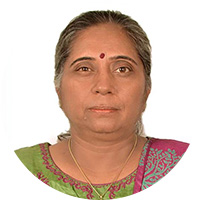
Dr. Vibha Ahuja
Senior Advisor, South Asia Biosafety Program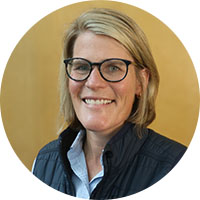
Dr. Jane Fife
Board Member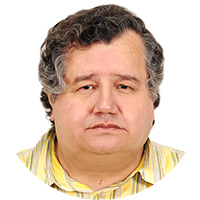
Dr. Rodomiro Ortiz
Board MemberSessions and Presentations
Day 1 - Parallel Session 6: Safe(r) Innovation Approaches – Non-Regulatory Approaches Fostering Safety in Innovation
Co-Chair: Dr. Andrew Roberts
November 3, 2025 | 16:00-17:30
Biotechnology and genetic engineering have a remarkable safety record. One contributing factor to this is high safety awareness during development. This includes recognition by researchers and technology developers that ensuring a culture of safety in laboratories, greenhouses, and field trials is important for meeting social and ethical obligations and for enabling future product success. As access to the tools of molecular biology expands and new developers enter the space, pushing the envelope of innovation and developing biotechnology in new organisms and for new applications, it is useful to consider the processes and methods that have been used by developers to ensure safety through the course of product development.
“Safe(r) Innovation Approaches” or SIA is the name given to a document in preparation jointly by the OECD Working Party on the Harmonisation of Regulatory Oversight in Biotechnology (WPHROB) and Working Party on the Safety of Novel Foods and Feeds (WPSNFF). The term is intended to describe a concept of incorporating safety considerations from the earliest design stages through a product’s lifecycle and is analogous to other terms like “Safe by Design,” “Responsible Innovation,” etc. The document itself is designed to highlight and exemplify practices and approaches that have been used by developers that reflect this approach. The session provided an update and overview of the work being done at the OECD, with speakers representing diverse types of developers sharing their experience implementing safe innovation approaches.
Agenda
| Time | Activity | Presenter/Facilitator | |
| 16:00-16:05 | Introduction | Marco Gielkens RIVM/GMO Office |
|
| Andrew Roberts Agriculture and Food Systems Institute (AFSI) |
|||
| 16:05-16:20 | Moving Towards a Safe(r) Innovation Approach in the Context of Modern Biotechnology – Activities and Discussions within OECD | Marco Gielkens RIVM/GMO Office |
|
| 16:20-16:35 | Evolution of Safe-by-Design Principles to Advance New GM Insect Protection Technologies to the Marketplace | Debbie Mahadeo Bayer CropScience |
|
| 16:35-16:50 | SIA in Practice: Developing Gene Drives | Zach Adelman Texas A&M University |
|
| 16:50-17:05 | Embedding Safety from the Start: Non-Regulatory Approaches to Safe(r) Innovation in Microbial Biotechnology | Leah Buchman Novonesis |
|
| 17:05-17:20 | Safer Innovation Approaches: iGEM | Christopher Isaac IGEM |
|
| 17:20-17:30 | Discussion | Marco Gielkens & Andrew Roberts |
Day 1: Pecha Kucha
Chair: Dr. Andrew Roberts
November 3, 2025 | 17:30-18:05
Pecha Kucha presentations were selected from submitted poster session abstracts and integrated into the program to allow early career scientists an opportunity to speak in front of symposium attendees.
Agenda
| Time | Presentation | Presenter/Facilitator | |
| 17:30-17:40 | Introduction | Andrew Roberts Agriculture & Food Systems Institute (AFSI) |
|
| 17:40-17:45 | Artificial Intelligence for Protein 3D Structural Analyses and Applications on Allergenicity Risk Assessment | Nida Ansari Medical University of Sofia, Bulgaria |
|
| 17:45-17:50 | Leveraging Gene-Edited BMPR2 Sheep Models for Biomedical Innovation: Advancing Understanding of Heritable Pulmonary Arterial Hypertension | Oluwafemi Ayobola Falade University of California, Davis |
|
| 17:50-17:55 | Quantification of the Digestive Resistance of Plant Proteins | Rina Matsuoka Chiba University |
|
| 17:55-18:00 | Omics Analyses of Null Segregants Obtained from the RdDM Transgenic Plants | Haruka Morimoto Chiba University |
|
| 18:00-18:05 | Genome Editing in Rice Using CRISPR/Cas9 for the Development of Thermo-sensitive Genic Male Sterile Lines | Kausalya Sakthivel Tamil Nadu Agricultural University |
Day 2 - Plenary Session II: Exploring Scientific Advancements, Opportunities, and Challenges in Bio-innovation
Speaker: Dr. Jane Fife
November 4, 2025 | 09:00-13:00
New scientific advancements and historical scientific data play a crucial role in shaping the discussions of today and influencing future decisions regarding bio-innovation. This plenary session highlighted advancements and challenges in the field and explored the potential opportunities and benefits of biotechnology in agriculture, nutrition, food security, and related topics. With an emphasis on science-based problem formulation, risk analysis, and safety assessments, this plenary session provided a platform for scientists, researchers, academics, and regulators to discuss the recent scientific advancements in plants, microbes, and animal biotechnology.
Agenda
| Time | Presentation | Presenter/Facilitator | |
| 09:00-09:15 | Opening Remarks | Mitscheli Rocha BASF |
|
| 09:15-10:00 | Can Genome Editing Drive Food Security in Africa? | Steven Runo Kenyatta University |
|
| 10:00-10:30 | Healthy Plants; Healthy People – Fortifying Vitamins and Phytonutrients in Tomato | Cathie Martin John Innes Centre |
|
| 10:30-11:00 | QCAV-4: A Cavendish Banana with Fusarium Wilt Tropical Race 4 Resistance Approved for Commercial Cultivation and Consumption in Australia | Jean-Yves Paul Queensland University Of Technology (QUT) |
|
| 11:00-11:30 | Break | ||
| 11:30-12:00 | Advancing Agricultural Biologicals: The Next Chapter in Crop Protection and Plant Health | Jane Fife 3Bar Biologics |
|
| 12:00-12:30 | Perspectives on Animal Biotechnology: Gene Edited PRRS-Resistant Pigs | Clint Nesbitt Genus Plc |
|
| 12:30-13:00 | Regulatory Risk Assessment and Food Innovation in Europe | Reinhilde Schoonjans European Food Safety Authority (EFSA) |
Day 3 - Plenary Session III: Governance and Regulatory Frameworks – Understanding the Global Landscape
Speaker: Dr. Rodomiro Ortiz
November 5, 2025 | 09:00-11:00
This session explored the importance of flexible and adaptable global governance and policy frameworks to support the rapid advancements in bio-innovation. Topics of interest broadly explored the regulatory and policy landscape pertaining to the application of genetic modification, genome editing or gene drives in agriculture (crops, animals, and biologicals), bio-industries, and environmental management. The session showcased examples of global regulations that are being adapted to foster an environment conducive to innovation while ensuring responsible development and deployment of bio-technological solutions. The session also highlighted the socioeconomic impacts of different policy approaches on the timely adoption of bio-innovation. This plenary session served as a platform for scientists and researchers from academia and industry, as well as regulators, to discuss different policy approaches and frameworks, their implementation, and the opportunities and challenges related to bringing sustainable bio-innovation to the market globally.
Agenda
| Time | Presentation | Presenter/Facilitator | |
| 09:00-09:15 | Opening Remarks | Jennifer Anderson Corteva Agriscience |
|
| 09:15-10:00 | Governance, Policy, and Regulatory Frameworks: Exploring the Global Landscape and Impact on Bio-innovation – The Case of New Breeding Techniques | Rodomiro Ortiz Swedish University of Agricultural Sciences |
|
| 10:00-10:30 | Africa and the Zero Hunger Agenda: Genome Editing Policy Landscape, Challenges and Opportunities | Samuel Timpo AUDA-NEPAD |
|
| 10:30-11:00 | Global Status of Animal Biotechnology | Alison Van Eenennaam University of California, Davis |
Day 3 - Parallel Session 1: Safety Considerations for Agricultural Microbial Products Derived from New Genomic Techniques (NGTs)
Co-Chair: Dr. Andrew Roberts
November 5, 2025 | 14:00-15:30
Agricultural biologicals encompass a wide range of crop production and protection tools derived from natural sources, such as microbes, biochemicals, plant extracts, or pheromones. These products serve various functions, including biofertilizers, biostimulants, and biopesticides. This session focused on the safety of microbial products created through new genomic techniques (NGTs), beginning with an overview of the different types of biological products and the existing regulatory frameworks. Both human and environmental safety considerations were subsequently addressed. Regarding human safety, challenges in testing microorganisms using new approach methodologies (NAMs) were addressed, and industry efforts to minimize animal testing where possible were discussed. Research into methods for assessing the environmental fate, including mobility and persistence, of microbial products was then highlighted, followed by a comparison of plants and microbes developed through NGTs, examining their similarities and differences. Global perspectives and experiences were infused throughout the parallel session, with academics and regulators offering diverse perspectives.
Agenda
| Time | Presentation | Presenter/Facilitator | |
| 14:00-14:05 | Introduction | Natasha Dixon Bayer Cropscience |
|
| Andrew Roberts Agriculture & Food Systems Institute (AFSI) |
|||
| 14:05-14:20 | Engineering Microbes to Boost Plant Immunity and Fight Plant Disease | Cynthia Gleason Washington State University |
|
| 14:20-14:35 | Genome Editing Regulation of Microorganisms in Brazil | Galdino Andrade National Biosafety Commission |
|
| 14:35-14:50 | Increasing Interest in Environmental Fate Aspects of Gene Edited Microbial-based Agricultural Products | Lisa Ortego Bayer CropScience |
|
| 14:50-15:05 | The Ever-Evolving World of Microbes: The Current State of Microbial Taxonomy, Genome Evolutionary Dynamics, and the Impact on Future Microbials Risk Assessment | Katie Karberg Bayer Crop Science |
|
| 15:05-15:20 | Biological Products, New Paradigms for the Sustainability of Crop Productions | Patrick du Jardin Gembloux Agro-Bio Tech, ULiège |
|
| 15:20-15:30 | Discussion | Natasha Dixon & Andrew Roberts |
Day 3 - Parallel Session 4: Hands-on Experience with the Crop Composition Database – A Tool Used in Food and Feed Safety Assessment
Chair: Dr. Bhavneet Bajaj
November 5, 2025 | 14:00-15:30
Composition studies that assess similarities and differences in levels of nutrients, anti-nutrients, and secondary metabolites are an essential part of the safety assessment of new crop varieties that are used as food and feed. It is important to understand the purpose of the data and its importance in safety assessment. This workshop provided an opportunity to discuss the rationale for considering composition data, how that data is interpreted in the context of natural variability of crop analytes, and limitations to compositional studies. The workshop introduced participants to the Crop Composition database (CCDB), a resource for assisting in the interpretation of compositional studies and demonstrated version 10.0 of the database. Participants had the opportunity to explore the search function of the database through a series of exercises, which enabled them to generate analyte reports for the crops of their interest.
Agenda
| Time | Presentation | Presenter/Facilitator | |
| 14:00-14:05 | Introduction | Bhavneet Bajaj Agriculture & Food Systems Institute (AFSI) |
|
| 14:05-14:20 | Compositional Variability in Food, Feed, and Fiber Crops: What Have We Learned from the Crop Composition Database? | Nancy Gillikin BASF |
|
| 14:20-14:35 | Development of Analytical Methodologies for Measuring Compositional Components in Agriculturally Important Crops | Ann Scaife Eurofins Food Chemistry Testing Madison Inc. |
|
| 14:35-15:20 | Hands-on Experience with the Crop Composition Database: A Tool Used in Food and Feed Safety Assessment | Bhavneet Bajaj | |
| 15:20-15:30 | Discussion | Bhavneet Bajaj |
Day 3 - Parallel Session 7: Developments in Gene Drive – Advances in Risk Assessment, Regulatory Frameworks, and Field Trial Design
Chair: Dr. Andrew Roberts
November 5, 2025 | 16:00-17:30
While the concept of a driving genetic element is not new, the discovery of the CRISPR-Cas system of molecular tools greatly increased interest in pursuing such technologies to address intractable biological problems, including long-term challenges in disease prevention and conservation. This has also been accompanied by the recognition that gene drives pose questions for environmental and ecological risk that are different than many of the biotechnology applications that have come before. While no gene drives have been released in the environment yet, research initiatives have made substantial progress in demonstrating the effectiveness of gene drive technologies in laboratory settings that closely mimic natural environments. These successes underscore the technology’s promise but also highlight the critical need to consider how to transition from controlled experiments to real-world field evaluations. The purpose of this session was to provide ISBR Symposium participants with an update on current efforts to develop and implement gene drives, as well as to update them on the status of risk assessment and biosafety research aimed at ensuring they are safe and effective, while also allowing these innovative mechanisms to eventually be released in order to address the environmental and health challenges they are hoping to address.
Agenda
| Time | Presentation | Presenter/Facilitator | |
| 16:00-146:05 | Introduction | Andrew Roberts Agriculture & Food Systems Institute (AFSI) |
|
| 16:05-16:20 | Advances in Field Trial Design of Gene Drive Technologies and Implications for Risk Assessments | John Connolly Imperial College London |
|
| 16:20-16:35 | Gene Drive Regulation: A Closer Look at International Frameworks | Zaira Lanna Outreach Network for Gene Drive Research |
|
| 16:35-16:50 | Environmental Risk Assessments with Socio-Economic Considerations | Delphine Thizy Delphine Thizy Consulting |
|
| 16:50-17:05 | Risk Assessment of Engineered Gene Drives: Developing Voluntary Guidance within the Framework of the Cartagena Protocol on Biological Safety | Werner Schenkel Federal Office of Consumer Protection and Food Safety |
|
| 17:05-17:20 | Preparatory Work for the Development of Risk Assessment Guidance for Gene Drive Modified Insects | Boet Glandorf | |
| 17:20-17:30 | Discussion | Andrew Roberts |