



Agricultural Biotechnology Seminar Series 2025 | Seminar 3: Current Status and Future Strategies for the Development of Agricultural Biotechnology Crops in Korea
-

November 21, 2025
9:00 am - 10:35 amVirtual (KST/UTC+9)
Seoul, Republic of Korea
-


Agricultural biotechnology has been used by farmers to contribute to greater agricultural productivity to meet the demand for food, build resilient supply chains, improve nutrition, enable environmental sustainability, and support climate change adaptation and mitigation. The 2025 Agricultural Biotechnology Seminar Series has enabled greater participation and ownership, supporting a collaborative environment by and among the APEC member economies who participate in the High Level Policy Dialogue on Agricultural Biotechnology (HLPDAB). As part of this project, member economies have shared information on innovative technologies, exchanged resources and experiences, discussed regulations, and promoted knowledge for the adoption, use, and trade of products of agricultural biotechnology. At the final event in this year’s series, discussions about the safe use of agricultural biotechnology as a key tool towards increasing agricultural productivity and addressing global challenges will continue.
The third and final installment in the 2025 Agricultural Biotechnology Seminar Series, this virtual seminar focused on the development of products of modern biotechnology to tackle present-day challenges presented by climate change. Developers from the Republic of Korea delivered presentations on innovations in the field of agricultural biotechnology that potentially offer solutions to support a sustainable food system, including the development of resilient plant varieties and oilseeds for biofuels.
The sponsoring economy for this session was the Republic of Korea.
Agricultural Biotechnology Seminar Series
By bringing together policymakers, risk assessors, and scientists, the series seeks to foster greater participation and enhance engagement in the APEC High Level Policy Dialogue on Agricultural Biotechnology (HLPDAB) outside of the annual meeting.
This seminar’s objectives were to:
- Share the current status and future strategies for technology development by agricultural biotechnology companies in the Republic of Korea.
- Explore avenues for collaboration among member economies to advance sustainable agriculture.

Agenda
9:00 am
Introduction
Bhavneet Bajaj, Ph.D.
Senior Manager–Scientific Programs, Agriculture & Food Systems Institute (AFSI), United States of America
9:05 am
Opening Remarks
Ki-Jong Lee, Ph.D.
Director – Biosafety Division, Rural Development Administration (RDA), Republic of Korea
9:10 am
Development of Non-Food Oil Crops for Biofuels Using Genome Editing Technology
Dong-Yul Sung, Ph.D.
Executive Vice President, Toolgen Inc., Republic of Korea
9:30 am
Precision Breeding Beyond Boundaries: Nulla Bio's Gene Editing Innovations for Sustainable Agri-Food Systems in APEC
Jae-Yean Kim, Ph.D.
Chief Executive Officer, Nulla Bio, Republic of Korea
9:50 am
Developing Crop Traits to Address Climate Challenge
Ju-Kon Kim, Ph.D.
Chief Executive Officer, Lasemilla, Republic of Korea
10:10 am
Moderated Question and Answer Session
Bhavneet Bajaj, Ph.D.
10:30 am
Closing Remarks
Ki-Jong Lee, Ph.D.
*AFSI is supported by a grant from the USDA FAS New Technologies and Production Methods Division.
Speakers
Dong-Yul Sung, Ph.D.
Executive Vice President, Toolgen Inc., Republic of Korea
 Dr. Dong-Yul (Dan) Sung is Executive Vice President and Head of the Seed and Business division of ToolGen, Inc. He is leading the development of genome edited crops, including corn, soybean, hot pepper, and rapeseed. Dong Yul graduated from the College of Agriculture and Life Science at Seoul National University before earning his Ph.D from the University of Florida, where he specialized in temperature stress tolerance in plants. He started his industry career at Monsanto (now Bayer Crop Science), a global seed biotechnology company. Throughout his ten-year tenure, he held various roles, including project lead for corn cold tolerance and crop physiology platform lead for phenotyping Monsanto’s corn and soybean pipeline. He returned to Korea in 2017 and successfully established the plant biotechnology and microbial biotechnology research and development platform in LG Chem. He also developed herbicide-tolerant crops, as well as numerous microbial strains that produce various high-value specialty chemicals.
Jae-Yean Kim, Ph.D.
Chief Executive Officer, Nulla Bio, Republic of Korea
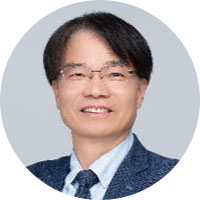 Kim Jae-yean is a Professor at Gyeongsang National University, where he has served since 2003, and is the esteemed Founder of Nulla Bio Inc., a pioneering crop genome editing company. He is a recognized expert in crop genome editing, specializing in advanced precision techniques, such as prime editing and homologous recombination-mediated gene targeting. In 2019, he founded the Korea Society of Plant Breeding Innovation and served as its first President for four years. His distinguished academic record includes an H-index of 55 and over 12,000 citations (according to Google Scholar), evidencing his exceptional achievements and positioning him as a top 2% scientist globally (2025). He has authored approximately 150 papers published in prestigious journals, including Nature Plants, Molecular Plant, and the Plant Biotechnology Journal. Furthermore, he has secured/filed 36 patent applications, including international PCT filings.
Ju-Kon Kim, Ph.D.
LaSemilla Inc., Republic of Korea
 Dr. Ju-Kon Kim is the Chief Executive Officer of LaSemilla Inc., bringing decades of experience in plant molecular biology and agricultural biotechnology. He earned his Ph.D. in Plant Molecular Biology from Cornell University in 1992, following an M.S. in Microbiology from the Korea Advanced Institute of Science and Technology (KAIST) and a B.S. from Seoul National University’s College of Agriculture and Life Sciences.
Dr. Kim previously served as a Predoctoral Fellow of the Rockefeller Foundation at Cornell University and later led the foundation’s International Rice Biotechnology Program. His academic career includes professorships at Myongji University and Seoul National University–Pyeongchang Campus, where he also served as Director of the Crop Biotechnology Institute and Dean of the Graduate School of International Agricultural Technology.
His research has focused on enhancing stress tolerance in crops, improving nitrogen utilization, and applying biotechnology to address food security. Dr. Kim has published extensively in high-impact journals, with recent work exploring transcriptional regulation and stress-responsive pathways in rice.
Bhavneet Bajaj, Ph.D., PMP
Senior Manager, Agriculture & Food Systems Institute (AFSI), USA
 Dr. Bhavneet Bajaj joined the Agriculture & Food Systems Institute (AFSI) in July 2018 as Scientific Program Manager. She has been involved in projects related to safety assessment of foods and feeds derived from genetically engineered plants and serves as a resource person in providing technical support for capacity building programs in biotechnology. She was also the program lead for USDA-funded technical training for Chinese and Indonesian regulators and manages operations for both the Crop Composition Database and the World Nutrient Databases for Dietary Studies.
Prior to joining AFSI, Dr. Bajaj was a Visiting Scientist at the Sustainable Agricultural Systems Laboratory, Agricultural Research Service, USDA, where she worked on carotenoid pathway regulation in tomatoes. Before then, she was Associate Investigator with the Plant Protection group at (then) DuPont, where she devised a metabolic engineering strategy for insect control in soybean. While in India, she was an Assistant Professor at Jaipur National University, where she taught genetic engineering, enzymology, and biochemistry courses to M.Sc. level students. Her research work over the past 12 years involved plant secondary metabolites of nutritional, agricultural, and medicinal importance.